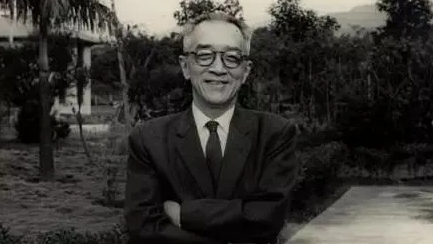
Hu Shi
Introduction
Hu Shi was a prominent Chinese philosopher, essayist, and diplomat, known as a key figure in the Chinese Cultural Renaissance and a pivotal leader in the New Culture Movement. His advocacy for the use of vernacular Chinese in literature spearheaded a revolutionary shift in Chinese literary tradition. As a scholar deeply influenced by Western philosophy, Hu Shi sought to modernize Chinese thought by integrating Western ideas, while retaining and adapting the essence of Chinese culture.
Early Life and Education
Hu Shi was born in Jixi county, which is now part of Xuancheng city, Anhui province, China. Raised in a traditional Chinese family, he received a classical Chinese education before furthering his studies in the United States. Hu Shi studied at Cornell University and later pursued a Ph.D. in philosophy at Columbia University under the mentorship of John Dewey, whose pragmatic approach to philosophy greatly influenced him.
Contributions to Literature and Philosophy
The New Culture Movement
Hu Shi was a leading advocate of the New Culture Movement, which aimed to reform Chinese society and culture by adopting aspects of Western culture, particularly in the realms of democracy and science. He emphasized the importance of literary reform, arguing for the adoption of baihua (vernacular Chinese) in order to make literature more accessible and relevant to the general populace.
Vernacular Chinese Advocacy
Hu Shi's push for vernacular Chinese was part of a broader movement against the classical Chinese language, which was seen as an obstacle to mass education and modern expression. His 1917 essay, "Some Modest Proposals for the Reform of Literature," outlined his vision for literary reform and became a foundational text for the movement.
Academic and Diplomatic Career
After returning to China, Hu Shi became a professor at Peking University, where he continued to promote literary and educational reforms. He held various academic and administrative positions throughout his career, including serving as the president of Peking University.
In addition to his academic work, Hu Shi was actively involved in diplomatic efforts. He served as the Republic of China's ambassador to the United States between 1938 and 1942, during which time he sought to strengthen China's international ties and garner American support during World War II.
Legacy
Hu Shi's legacy is profound, as he played a central role in shaping modern Chinese thought and language. His advocacy for the use of vernacular Chinese in literature helped lay the foundation for contemporary Chinese literature and education, making it more inclusive and reflective of everyday life. As a philosopher, Hu Shi's commitment to pragmatic and humanistic principles continues to influence Chinese intellectual discourse.
His efforts to bridge Eastern and Western cultural and intellectual traditions have also had a lasting impact, contributing to a more open and dynamic cultural exchange. Hu Shi's work remains a testament to the transformative power of cultural and intellectual reform in shaping a nation's future. Photo Gallery(1 picture)CategoriesLiteratureTagHistorical FiguresModern and Contemporary Chinese HistoryRelatedLi ZhizaoCatalogue1. Introduction2. Early Life and Education3. Contributions to Literature and Philosophy4. Academic and Diplomatic Career5. Legacy- - - []








